
Key Takeaways
- Open shelving ideas earn their place in Singapore homes in specific rooms and positions, not as a universal kitchen or living room approach.
- Kitchen shelving works when it holds items used daily and displayed with intention. It fails when it holds everything the closed cabinets would have held.
- Display storage in a living room or study works when the items on the shelf are curated and stable. It fails when the display is used as overflow.
- Practical home design treats open shelving as a tool with specific conditions, not a trend to apply across the home.
- Singapore’s humid climate and oil-mist cooking environment make the kitchen the highest-risk location for open shelving maintenance.
Introduction
Open shelving looks right in photographs. A row of matching ceramics on a floating timber shelf. A few cookbooks spined outward. A plant at one end. The image suggests a home that is organised, curated, and effortless.
The reality in most Singapore kitchens is different. Within a few weeks of installation, the shelves hold cooking oil bottles that don’t match, a stack of mismatched bowls waiting to be put away, and a layer of grease mist from daily stir-frying that settles on everything exposed. The ceramics are still there, but they’re no longer the point.
The question isn’t whether open shelving looks good. It clearly can. The question is where it works, and where, in a Singapore home, the conditions that make it fail are already built into the space.
What Open Shelving Actually Requires to Work
Open shelving is not a storage solution. It’s a display system that also happens to hold things. The distinction matters because the maintenance and curation demands are completely different.
A 2022 analysis by Homes and Gardens noted that open kitchen shelving requires consistent curation and regular cleaning to maintain its visual appeal. Items that look considered on day one look like clutter by week four if the editing discipline slips. In Singapore’s kitchen environment, this challenge compounds. High ambient humidity encourages mould on ceramic surfaces that aren’t regularly handled. Oil mist from wok cooking settles on all exposed surfaces near the hob. Anything within 60 centimetres of an active burner will need wiping down regularly.
Open shelving works when three conditions are met: the items on it are used daily enough to stay clean, they’re edited ruthlessly enough to remain visually consistent, and the position of the shelf is far enough from cooking activity to avoid oil and steam contamination.
Where Open Shelving Works in a Singapore Home
The Living Room Feature Shelf
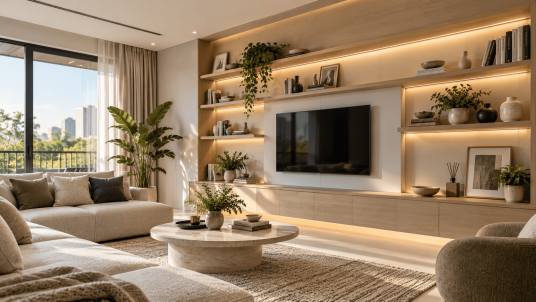
The living room is the highest success location for open shelving ideas in Singapore. The specific conditions that make kitchens difficult (oil mist, grease, and high humidity from cooking) are absent from the living room. The items typically displayed (books, ceramics, plants, framed objects) don’t accumulate kitchen grime. The shelf is also visible from the primary seating position, which means it has inherent design value as a visual anchor in the room.
A floating timber shelf above a media console, or a wall-mounted display shelf flanking a feature wall, works in a Singapore living room for the same reason it works in any home: the environment is controlled, the items are stable, and the maintenance is manageable. The curation challenge is real, but it’s a monthly edit rather than a weekly scrub.
In a compact Singapore condo or HDB living room, a single floating shelf at eye height above the TV console is more effective than a full shelving unit. It adds usable shelf space without competing with the room’s furniture for visual weight.
The Study or Home Office Zone
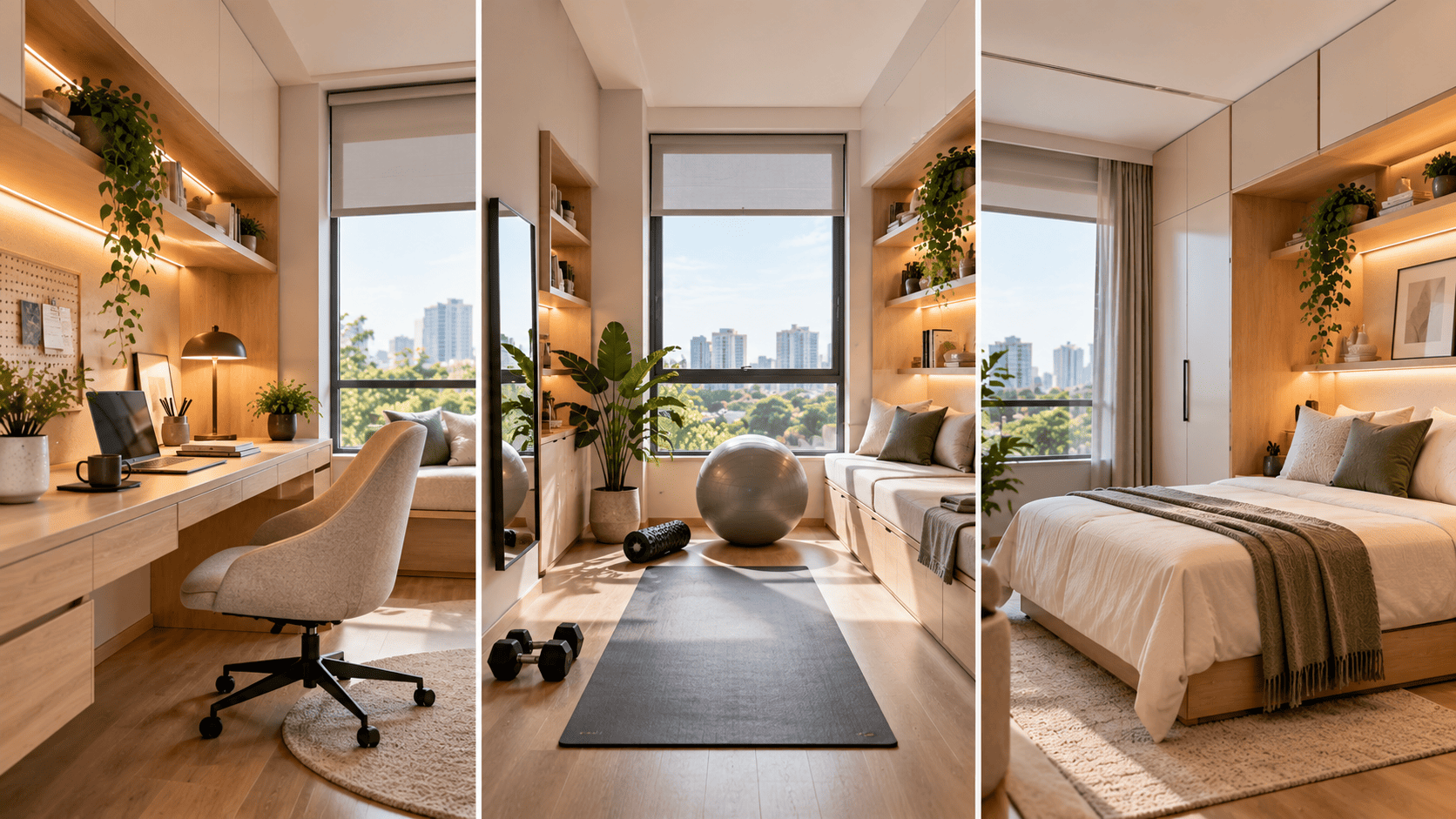
A study shelf works in Singapore homes for the same reasons as the living room. The environment is clean and stable. Books, folders, and reference materials don’t attract kitchen contamination. The shelf can hold both functional items (reference books, filing boxes) and personal objects (a small plant, a framed photograph) without the curation becoming onerous.
In a Singapore HDB where the study is carved from a corner of the living room, an open shelving unit positioned to define the zone does double work: it provides a shelf for books and work materials while creating a visual boundary between the desk zone and the living area without a physical partition.
The Bathroom Floating Shelf (with Conditions)
A bathroom floating shelf works in Singapore when it holds items used daily: a few hand soaps, a small plant, and one or two personal care products. Nothing more. The temptation in a compact Singapore bathroom is to use the shelf as additional counter space, which immediately makes it look cluttered.
A single open shelf above the vanity, holding three to five items, styled with care, adds a shelf without demanding constant reorganisation. It also adds warmth to a room that is often dominated by tile and chrome. The condition in Singapore’s humid bathrooms is that materials matter: a timber shelf in a poorly ventilated bathroom will warp. A powder-coated metal or terrazzo shelf holds up better in Singapore’s bathroom conditions.
Where Open Shelving Fails in a Singapore Home
The Singapore Kitchen
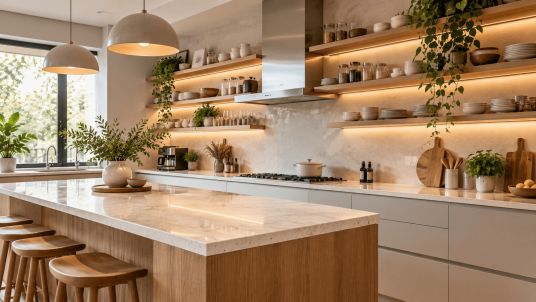
The kitchen is where most Singapore homeowners encounter the gap between the open shelving concept and reality. The appeal is straightforward: open shelving makes a compact kitchen feel less enclosed, brings frequently used items within reach, and creates an opportunity to display the kind of cookware and ceramics that are genuinely attractive.
The failure conditions in Singapore kitchens are specific. First, the cooking environment. Singapore’s cooking culture involves high heat, oil, and wok techniques that produce more airborne oil mist than lower-intensity cooking. This settles on all exposed surfaces, including shelves within range of the hob. Items stored within 60 to 80 centimetres of an active burner will need wiping down daily to remain presentable.
Second, the storage volume problem. A Singapore kitchen designed for a household of three or four people holds a lot of kitchen equipment. Open shelving only works visually when it holds a curated selection rather than the full complement of what a working kitchen contains. When the shelf starts holding what the closed cabinet would have held (the mismatched mugs, the spare rice cooker, the cooking oil collection), the open shelving becomes visual clutter rather than useful storage.
Third, humidity. Singapore’s ambient humidity promotes surface mould on ceramics and timber that aren’t regularly handled. Items that are genuinely used daily stay clean. Items that are displayed but rarely touched will accumulate both dust and surface mould in Singapore’s climate within a few months.
The exception is a narrow open shelf above the countertop, positioned away from the cooking zone, holding items used daily: a few spice jars in matching containers, a cutting board, and a small herb plant. This works. The full open-shelving kitchen, where all upper cabinets are replaced with open shelves, is rarely seen in Singapore.
The Bedroom
Bedroom open shelving fails in Singapore for a different reason from the kitchen. The environment is fine: no cooking contamination, lower humidity in air-conditioned rooms. The problem is the function. Bedrooms hold personal items that benefit from concealment: clothing, personal care products, reading material mid-read, charging cables, and sleep-related items. These are not display items. Placed on an open shelf, they produce a visual busyness that works against the bedroom’s need to feel settled.
The exception is a bedside shelf or a small floating shelf on the headboard wall holding two or three personal objects: a lamp, a book, and a small plant. This works because the edit is small enough to hold. A full open shelving unit in a bedroom wardrobe zone rarely does.
The Rule: Edit First, Then Open
The most reliable predictor of whether open shelving will work in a Singapore space is not the room, the material, or the design. It’s the discipline of the person maintaining it. Practical home design treats this honestly. If you routinely accumulate items on any flat surface in your home, open shelving will amplify rather than solve that pattern. If you routinely edit and return things to their correct position, open shelving will reward that discipline with a visual warmth that closed joinery can’t provide.
The decision order for Singapore homes is:
- Identify which items you want visible and would display with care
- Specify open shelving only for those items, in that position
- Use closed joinery for everything else
This sequence, applied to shelves in the kitchen, living room, and bedroom, produces open shelving that earns its place rather than accumulating evidence of the decision.
“In Singapore, the best open shelving is the shelf you added last, after you’d placed everything else, and realised one small surface could hold the three things you reach for every morning.”
Which Open Shelving Ideas Actually Work in Your Singapore Home?
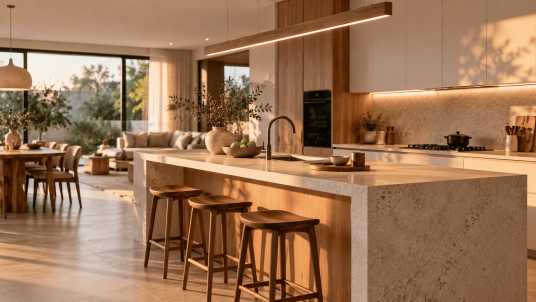
It depends on the room and the items, not the aesthetic. For the living room and study, open shelving ideas consistently deliver. For the kitchen, a narrow shelf away from the cooking zone works; full upper open shelving rarely does for long. For the bedroom, small and selective is the limit. For more on how storage planning integrates into a full Singapore renovation brief, the LOME Interior open kitchen design guide covers how storage planning fits into the kitchen layout decision. The LOME Interior small-space design guide covers how to display and store in compact Singapore homes. If you’re planning a renovation and want the shelving and storage decisions made as part of your design brief rather than after the joinery is built, speak with the LOME Interior team.
Frequently Asked Questions
1. What works for open shelving in a Singapore HDB kitchen?
A single narrow shelf positioned 60 centimetres or more from the active cooking zone, holding daily-use items in matching containers. Spice jars in uniform vessels, a small herb plant, and a cutting board. No more than five to seven items in total. This position and edit avoid the oil mist and storage-overflow problems that make full open-shelf kitchens difficult to maintain in Singapore’s cooking environment.
2. Why does kitchen shelving fail in most Singapore homes?
Two reasons compound each other. Singapore’s wok and high-heat cooking produce more oil mist than lower-intensity cooking, which settles on all exposed surfaces near the hob. And a working Singapore kitchen holds more items than any shelf can display while maintaining the curated look that makes open shelving visually effective. When the shelf becomes general storage, it reads as clutter. When it stays curated, it works. The daily discipline required is higher than most households can sustain.
3. What is the best room for display storage in a Singapore home?
The living room, consistently. No cooking contamination, stable environment, items that are inherently display-suitable (books, ceramics, plants), and a position where the shelf is always within the visual field of someone on the sofa. A floating timber shelf above the TV console or flanking a feature wall provides display storage that requires a monthly edit rather than a weekly maintenance routine.
4. How does a practical home design approach open versus closed storage?
By starting with the function. What needs to be reached daily? What needs to be hidden? What is genuinely display-worthy? Only the third category belongs on open shelving. The first belongs in drawers or lower cabinets. The second belongs in closed upper joinery. This decision map should be drawn before any shelving specification is made, and it often finds that open shelving covers a smaller area than the initial brief assumed, because most kitchen and bedroom items don’t survive the “is this display-worthy” question.
5. Does open shelving work in small Singapore condos?
In specific positions, yes. A single floating shelf in the living room adds warmth and storage without taking up floor area. A narrow shelf above a kitchen counter, positioned away from the cooking zone, adds practicality without replacing cabinet storage. A bathroom shelf above the vanity works when holding three items. The approaches that consistently fail in small condos are the ones that try to replace closed joinery entirely. The floor area is too small to accommodate the visual complexity that a full open shelving setup produces when it inevitably accumulates more than its display-worthy edit.
Open shelving works in Singapore homes in the same way it works anywhere: when the environment suits it, when the items deserve display, and when the person maintaining it will actually maintain it. The kitchen is the hardest location in a Singapore home for all three of those conditions. The living room is the easiest. Everything else falls somewhere between, and the decision in each case is the same: edit first, then open.
