
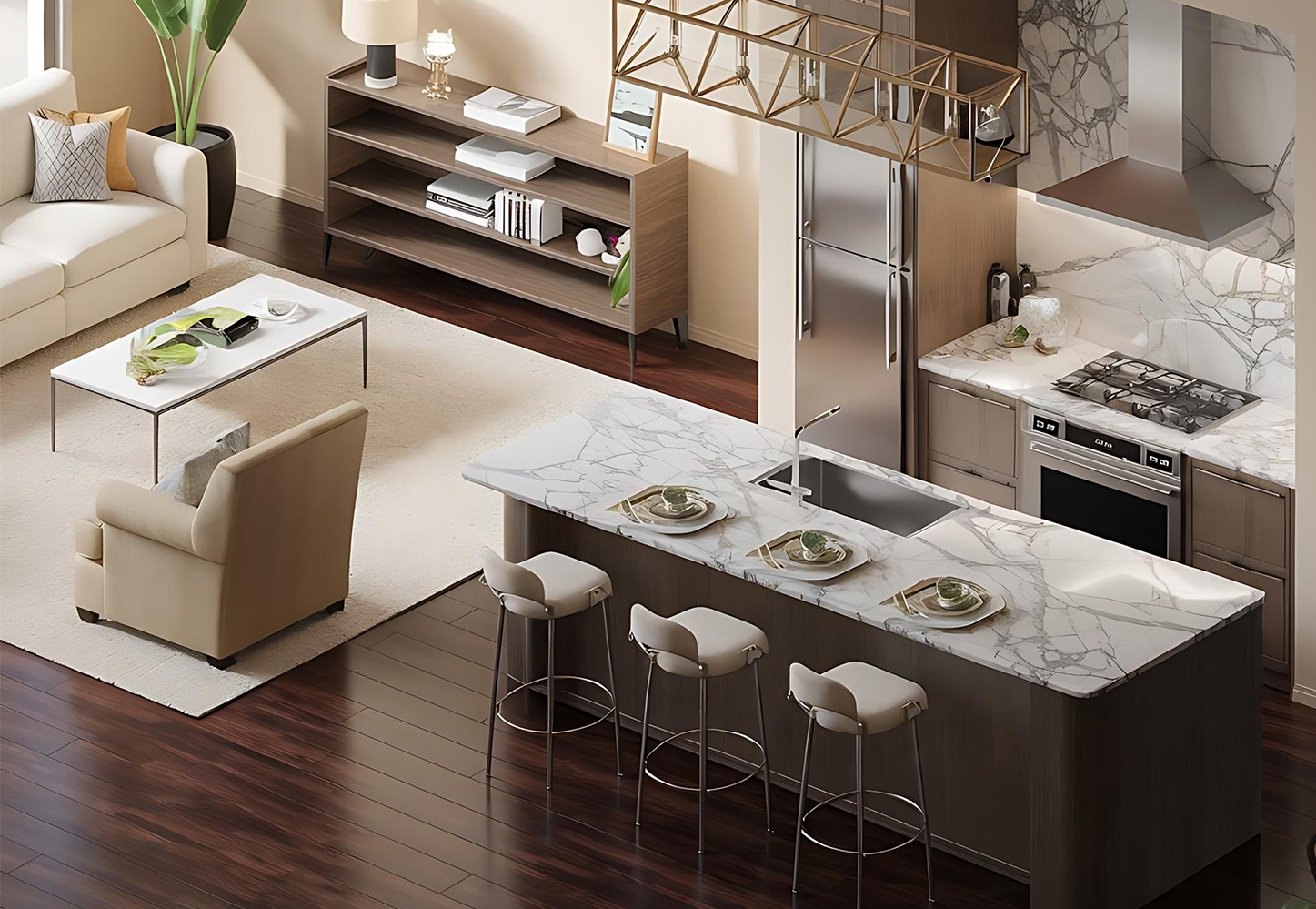
The open kitchen design remains a key element for contemporary Singaporean offices, and homes particularly in HDB flats and condos which face space constraints. Singapore’s open-plan kitchen market has expanded by roughly 42% during the last five years because modern interior styles have gained popularity.
The 2026 focus extends beyond wall removal activities. The workplaces, and homeowners want smart storage solutions which include visual flow control between their different areas. This blog provides information about planning and layout choice and material selection and common problems. The article will guide you through the entire open kitchen design ideas in Singapore process with recommendations tailored to workplaces, and local residential environments.
The kitchen framework will help you design a kitchen space which combines spaciousness with practical needs for daily use.
Read More : Types of Flooring in Singapore: A Complete Guide
How is Singapore’s Open Living in 2026?
The Singaporean layout system has undergone major changes throughout the previous years. Developers now choose flexible living spaces which include dining spaces for their offices, new BTO projects and their small condo buildings. The compact offices, and residential spaces create a feeling of confinement through their wall structures.
People now prefer open kitchen design because it enables them to prepare meals while dining and socialising in one cohesive space.
Interest lies in these features:
- Better natural light flow
- Easier socialising with family and friends
- Larger compact units create the impression of a more spacious room
Design professionals are changing their kitchen design methods to meet client needs for Singaporeans who want both clean lines and hidden storage options.
The next topic after current directions relates to open layouts requires examination.
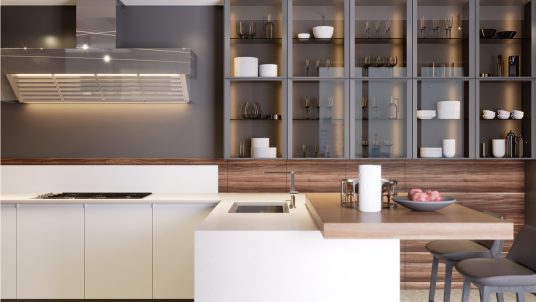
Why Open Layouts Function Better?
Singapore prioritises space efficiency above all other factors. HDB flats require effective layout planning because their floor space ranges from 900 to 1,200 square feet.
The local community sees multiple advantages from the open kitchen design because it provides three main benefits:
Maximises Limited Floor Area
Visual connections establish sight lines which connect adjacent spaces through the removal of non-structural walls. The office, and home maintains its original dimensions yet produces an impression of expanded space.
Airflow Pathways
Ventilation systems and window positioning create better airflow rates in comparison to closed kitchen environments.
Supports Modern Lifestyles
Modern living requires support through multiple dining options. The layout works well for organising social events because it allows members to spend time together.
The cooking design requires planning based on the actual cooking patterns found in family homes which frequently use intense stir-frying techniques.
The assessment of building limitations comes before any design work starts.
Step 1: Review Structural and Regulatory Constraints
All wall hacking requires you to check building guidelines before proceeding with the process.
For Singapore:
- Identify which walls provide structural support.
- Renovation permits need to be submitted when they are necessary.
- Gas pipe relocation requires compliance with all relevant regulations.
- For HDB flats, condo owners should consult the Management Corporation Strata Title (MCST) for approval.
The use of partial glass partitions or sliding panels becomes necessary when full hacking is not permitted. These systems create an open space which helps control smoke and odors.
The space will receive proper organisation after all structural matters are settled.
The first step requires you to establish specific areas which you will use to divide up an entire area.
Step 2: Define Zones Within One Space
An open layout still needs clear boundaries. Spaces without designated zones will accumulate clutter more quickly.
The following sections explain how to organise the space:
- Kitchen Zone: The area includes all cooking appliances and all main storage elements.
- Prep Zone: The counter space is positioned close to the sink and hob.
- Social Zone: The area includes an island counter or breakfast bar which faces the living room.
The 2026 design of open kitchens will focus on creating unnoticeable design changes. The ceiling lighting and flooring changes as well as the cabinetry finishes will create visual boundaries between different areas of space.
The next task after zoning completes requires planning for airflow systems.
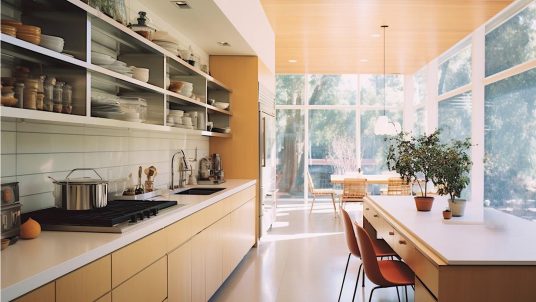
Step 3: Plan Ventilation Early
The step requires you to establish ventilation systems which you will implement in your design.
The persistent cooking odours which linger after open kitchen meals present a common dining issue throughout Singapore.
The planning process needs to address this issue through these two tasks:
- Install a high-suction hood suitable for Asian cooking.
- Ducted systems should be used instead of recirculating systems whenever it is feasible to do so.
- The hob needs to be positioned away from living room fabrics.
This requires ventilation planning to occur before carpentry work begins.
The selection of materials will occur after you have finished accounting for ventilation requirements.
Step 4: Choose Durable and Cohesive Materials
The kitchen space will create a living area because it shares its design elements with that space.
Modern materials include the following elements:
- Warm neutrals exist in matte laminates.
- Quartz countertops offer long-lasting durability.
- Fluted glass cabinet panels
- Smooth backsplash designs
Open kitchen design in modern Singapore homes often mirrors living room cabinetry colours. This creates a unified look instead of a sharp contrast.
The choice of materials determines the overall atmosphere while storage space design establishes how organised the area remains throughout the day.
Step 5: Conceal Clutter With Smart Storage
Clutter becomes more visible when you can see all parts of your kitchen space.
The kitchen setup includes these elements:
- Tall pantry cabinets
- Built-in appliances
- Drawer organisers
- Hidden bins
Minimalist styling provides design advantages through its ability to function as everyday office, and home elements and as staging items for property owners who want to show their homes to other people.
The current year of 2026 sees corporate and commercial open kitchen design work to achieve two goals which are operational efficiency and visual impact.
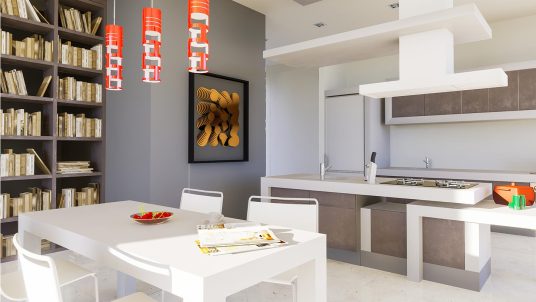
Corporate and Commercial Open Kitchen Design for 2026
Open kitchen design has expanded beyond its previous restrictions to residential buildings. The upcoming 2026 period will see restaurants and cafés, co-working spaces and showrooms and corporate offices adopt open kitchen designs to establish transparent spaces that foster customer interaction and create lively environments.
Continue Reading : Resort Style Interior Design Ideas & Inspiration for 2026
Why Open Kitchens Work in Commercial Spaces?
Modern consumers value experience and authenticity. The open kitchen space permits customers and clients to witness the actual process of making products which helps establish trust between them while bringing positive energy into the area. The design of open pantry spaces in offices enables employees to work together and build informal connections with each other.
Commercial spaces use open kitchen design to create the following advantages:
- Provides visual transparency which helps to establish brand trustworthiness for customers.
- Creates interactive dining spaces which provide dining customers with hospitality experiences.
- Strengthens the customer connection with staff members who serve them food.
- Allows urban compact units to achieve better space organisation through enhanced movement between different areas.
- Creates a modern space that reflects current lifestyle trends of people.
In Singapore’s space-restricted environment, open layouts create extra usable floor space while they also enhance ventilation specifically needed for food and beverage operations.
LEARN MORE : Resort Style Interior Design Ideas & Inspiration for 2026
Considerations for Commercial Open Kitchens
The functional needs of commercial open kitchens must take priority over their visual design, which needs to show aesthetic appeal. The critical requirements include:
- The need to have proper exhaust and ventilation systems.
- The equipment needs to control noise effectively.
- The customer-facing space requires proper heat management methods.
- The materials need to have two main requirements which are durability and simple cleaning.
- The space needs to have two distinct zones for guest areas and preparation zones.
This improves customer experience while it strengthens brand identity and creates a vibrant space that actively engages people.
The evaluation of different layout styles benefits from assessing the architectural elements which follow the main procedures of the building design process.
Comparison of Layouts
Here’s a simplified comparison of common layouts for Singapore:
| Layout Type | Best For | Pros | Considerations |
| Fully Open | Small condos, BTO flats, compact HDB units, small wotkplaces | Creates maximum visual space, improves natural light flow, encourages interaction between kitchen and living area | Requires strong ventilation, cooking smells may spread, visible clutter if not well organised |
| Semi-Open (Glass Panels or Sliding Doors) | Individuals who cook frequently, or preparing heavier meals | Controls smoke and grease while maintaining light flow, offers flexibility to open or close space, reduces noise from appliances | Higher installation cost, requires track or panel maintenance, glass needs regular cleaning |
| Island Layout | Larger HDB flats, executive workplaces, apartments, landed homes | Encourages social interaction, adds prep surface and storage, can double as dining or breakfast counter | Needs adequate clearance space (at least 1–1.2m around island), may increase renovation cost, electrical/water points must be planned early |
| Peninsula Layout | Medium-sized flats, corner units, small offices | Provides extra counter space without requiring full island clearance, helps define zones in open layouts | Less circulation space than island, can make layout feel tight if poorly planned |
| Partially Partitioned (Half Wall or Feature Divider) | Individuals wanting zoning without full enclosure | Maintains openness while visually separating cooking area, can hide countertop clutter, allows creative design features | Does not fully block smoke or odours, may reduce natural light depending on height |
| Enclosed with Sliding Doors | Heavy cooking households, multi-generational families | Contains smells, noise, and grease; can be opened during gatherings; practical for Asian cooking styles | Reduces visual openness when closed, track systems require upkeep, slightly higher renovation budget |
The selection of an appropriate layout requires assessment of cooking practices and examination of available space in the environment.
The actual project example shows how these principles get applied into a space that people actually live in.
A Scandinavian-style HDB Kitchen in Bukit Batok West
A young couple in Bukit Batok West worked with designers to refresh their HDB kitchen with a Scandinavian-inspired open concept. The kitchen renovation removed the earlier closed kitchen design to create an area which connects kitchen functions with dining and living space through its design. The designers selected light materials and organised storage elements to maintain a bright space which keeps everything in order.
The result:
- Brighter, more spacious feel with better sightlines across the home
- Additional countertop and seating space at the island
- Smooth transition between food prep, dining, and living zones
The design of the HDB open kitchen shows how Singaporean HDB kitchens create spaces which present both open visual areas and functional everyday use.
Conclusion
The open kitchen design remains popular in Singapore for 2026 because workplaces, and homeowners want open areas which multiple people can use together.
The open kitchen space needs a thorough design process which includes everything from choosing materials to setting up the space to finalise the ventilation system and create the zoning areas. Open kitchen systems enable people to use their kitchens for every daily activity as well as for hosting guests and for determining future resale values.
LOME Interior helps you achieve your dream open kitchen space through our team which possesses years of industry experience in the renovation field of Singapore.
We feature 2 showrooms which allow you to see different layouts and materials while you can directly consult with designers who transform ideas into real designs. The entire project process starts with detailed consultation and intelligent space planning which leads to the creation of 3D perspective drawings.
Create an open kitchen that supports cooking, hosting, and daily routines with ease. Book a free quotation at LOME Interior today to begin creating a space which represents contemporary Singaporean living.
Visit any of our two showrooms at Joo Chiat Complex (#01-1135) or Toa Payoh Central (#01-364), we’re open daily from 11AM to 8PM or contact 6747 0893/6253 8272.
FAQs
Q1. Is open kitchen design suitable for heavy cooking in Singapore?
Yes, but it requires proper ventilation planning. The system uses a high-capacity hood with an intelligent layout design to decrease the movement of smoke and odours throughout the space.
Q2. How much space do I need for an open kitchen?
Even compact BTO flats can support this layout. The space requires particular zoning rules combined with built-in storage to function properly.
Q3. Does an open kitchen increase property value?
Many buyers prefer open layouts, especially younger homeowners. The resale value depends on workmanship and design quality of the entire property.
Q4. Can I create an open layout without hacking walls?
Yes. The space provides glass partitions and sliding doors which create wide entryways that produce visual effects similar to complete wall demolition.
