
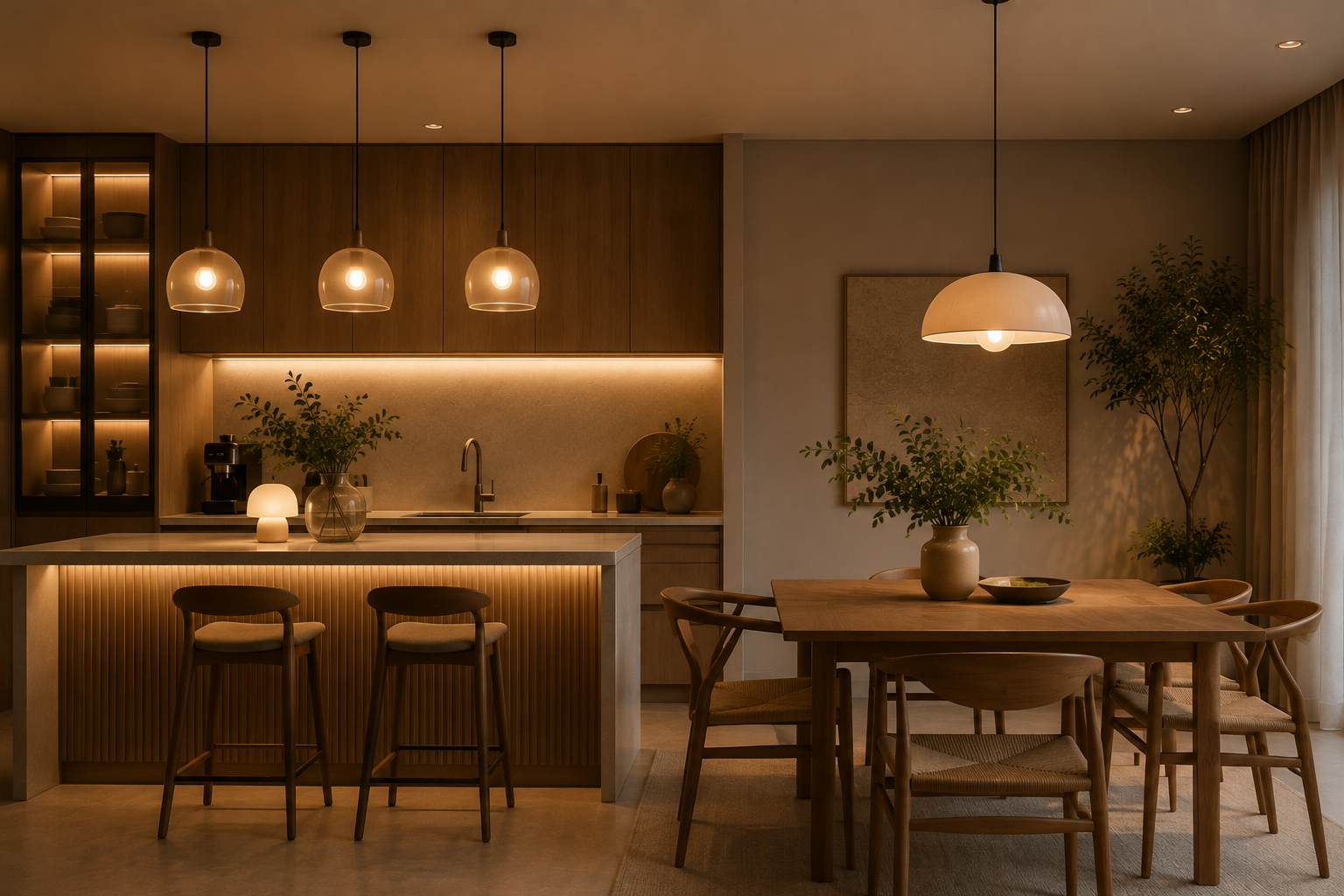
Key Takeaways
- Home cafe design in Singapore is rising because more homeowners want the atmosphere of a café without the cost or the commute.
- A cosy dining corner doesn’t require a dedicated room. It needs a defined space, warm lighting, and the right counter format.
- Café-inspired interior design works in HDB and condo kitchens by borrowing four specific principles from hospitality design.
- Lifestyle home design that includes a café zone adds daily-use value to the dining area beyond weekend brunches.
- The renovation decisions that create a café feel are material, lighting, and layout choices, not decorative ones.
Introduction
Singapore has one of the most active café cultures in Southeast Asia. On any weekend morning, neighbourhood cafés fill up by 9 am. The ritual of a flat white and a good seat has become part of how many Singaporeans start their day.
Rising café prices are changing the calculation. According to the Singapore Dining Out Report 2025 by YouGov, 32% of Singapore diners say they’re eating out less often than a year ago. Cost pressure is the main driver, with 65% of that group citing rising restaurant prices. The appetite for the café experience hasn’t gone away. The location of it is shifting.
This is the renovation response to that shift. Homeowners aren’t simply buying better coffee equipment. They’re creating spaces in their homes that deliver the atmosphere of a café: the warm pendant light above a counter, the timber surfaces, the defined zone that feels distinct from the rest of the house. When the design decisions are right, a well-designed dining corner in a Singapore kitchen or living room can produce the same settled, unhurried quality that draws people to cafés in the first place.
What Is Home Cafe Design?
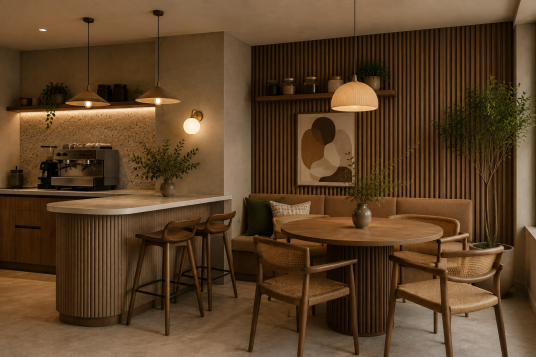
Home cafe design is the practice of applying hospitality-inspired design principles to a residential dining or kitchen zone to create an atmosphere of warmth, comfort, and informal sociability. It draws on the specific visual and material properties that make café interiors feel inviting: warm lighting at pendant height, natural materials with visible grain or texture, counter seating that puts people side-by-side rather than facing across a table, and a defined zone with enough visual separation from the rest of the home to feel like its own space. In a Singapore HDB or condo, this approach is typically applied to the dining corner, kitchen island, or a bay window nook. These are compact footprints that suit the café atmosphere without requiring a large floor area.
Why Singapore Homes Are Suited to Café-Inspired Design
Singapore’s housing typology suits café-inspired interior design more than most people expect. The HDB and condo kitchen and dining zones in Singapore are typically compact, which is exactly the spatial condition that makes café interiors feel intimate rather than empty.
A large dining room with a formal table and eight chairs doesn’t produce a café atmosphere. A 2-by-4 metre dining zone with a timber counter, two pendant lights, and a pair of bar stools does. The scale that Singapore homeowners often see as a limitation is actually the scale at which café-inspired design performs best.
Singapore’s café scene has also trained local tastes well. Most Singapore homeowners who visit cafés regularly have a clear sensory memory of what makes a space feel right: the amber glow of warm lighting, the texture of a timber surface underfoot or at the counter, the ambient sound that comes from proximity to a working kitchen. The same vocabulary gets borrowed and brought into the home in material and layout terms.
The shift toward hybrid work in Singapore has also changed how dining corners are used. A zone that was previously occupied only during meals now hosts morning coffee and laptop sessions. That expanded use makes lifestyle home design decisions more valuable: a well-designed café corner earns its place across more hours of the day.
“In Singapore, the café corner is replacing the formal dining table for households that eat out regularly and want the home’s dining zone to serve as something other than just a meal-delivery point.”
The Four Design Decisions That Create a Café Feel at Home
Counter Seating Oriented Toward the Kitchen
The most immediately recognisable quality of a café interior is counter seating. Bar stools at a counter-height surface, with the kitchen or coffee preparation zone in the direct sightline, produce the atmosphere of watching something being made. This is different from a standard dining table where everyone faces each other.
In a Singapore condo with an open kitchen and a kitchen island, extending the island with a bar-height overhang on the living room side creates this format. Two bar stools, a counter at 105 centimetres, and a 35-centimetre overhang for knee clearance is the basic spec. Anyone seated at the counter faces the kitchen. Morning coffee preparation becomes part of the shared experience rather than a solo task completed off-scene.
In an HDB without an island, a narrow counter running along one wall of the kitchen, at bar height with a pair of stools, achieves the same sightline. The footprint is small: 60 centimetres deep, 120 centimetres wide. The effect is immediate. The zone reads as café rather than canteen.
Warm Pendant Lighting at Counter or Table Height
Café lighting is defined by two qualities: warm colour temperature and low positioning. Pendants that hang at 60 to 70 centimetres above the counter or table surface cast a pool of warm light that defines the zone and creates the intimate, drawn-in atmosphere of a good café seat.
For a café-inspired corner in Singapore, warm white bulbs between 2700K and 3000K are the correct colour temperature. The pendant should hang low enough to light the surface without shining into the eyes of someone seated. A pair of pendants above a kitchen counter or dining table, on a dimmable circuit, gives the zone the ability to shift from bright morning light to mellow evening ambience.
The pendant style matters for this aesthetic. Rattan, brushed metal, or glass pendants in simple geometric forms suit most home café settings in Singapore. Ornate or residential-looking pendants shift the atmosphere away from the café register. The pendant should feel like it belongs to a space designed for lingering, not just eating.
A Defined Corner Zone With Visual Separation
What makes a café seat feel different from any other chair is the sense of being in a defined space within a larger one. The counter by the window. The nook at the back. The banquette along the wall. These positions share a quality: they have a boundary on at least one side, which creates enclosure without isolation.
A cosy dining corner in a Singapore home achieves the same effect through a few simple means. A banquette along one wall with a fixed table and bench seating creates the café-inspired interior quality of enclosure through the built-in structure. A rug under a small dining table defines the zone within an open-plan floor. A half-height partition or a run of lower shelving between the dining area and the living space creates visual separation without blocking light.
Bay windows in Singapore HDB flats are the natural candidate for a café corner. The window ledge, built as a cushioned bench seat with storage below, becomes the equivalent of the window seat that most café-goers prefer. A small table in front of it, two cups and good light, and the space reads as a deliberate café nook rather than an underused ledge.
Timber Surfaces and Tactile Material Choices
Cafés use timber because it works. Timber counters, timber flooring, timber café chairs, and timber wall panelling all contribute to the warm, grounded quality that makes a good café feel like somewhere worth spending time. The material is warm in tone, carries visible grain variation, and feels different underfoot and in the hand than polished tiles or laminate.
For lifestyle home design with a café-inspired aesthetic, timber veneer on a kitchen island countertop, a timber floating shelf above the counter zone, and a timber or rattan pendant above the table form the core material palette. These three elements, distributed across a compact dining corner, create the material warmth of a café interior without requiring full renovation of the kitchen.
Where timber countertops suit the cooking environment, sintered stone in a warm stone or travertine-effect finish is the practical alternative for Singapore kitchens exposed to daily heat and moisture. The visual quality is similar. The maintenance requirement is significantly lower.
“Timber and warm light do the same work in a home café corner that they do in a good café. The material and the light tell the body it’s somewhere to slow down.”
Is Home Cafe Design Right for Your Singapore Home?
For any Singapore homeowner who drinks coffee daily, uses the dining area for morning routines, or works from home part of the week, this design approach adds daily-use value to a zone that often sits idle. This type of corner in a compact HDB or condo kitchen doesn’t require a structural change. Counter seating, a warm pendant on a dimmable circuit, a timber surface, and a defined zone are renovation and furnishing choices that suit most Singapore floor plans. The LOME Interior service page covers how the team approaches lifestyle-driven design briefs from the planning stage.
Frequently Asked Questions
1. How much space do I need for a home café corner in a Singapore HDB or condo?
A functional café corner needs as little as 2 square metres. A narrow bar counter 60 centimetres deep and 120 centimetres wide with two bar stools takes that footprint. A bay window nook converted to a bench seat and a small table occupies a similar floor area. The footprint is deliberately compact, which is exactly why this design approach suits Singapore’s housing scale well.
2. What furniture works best for a Singapore café corner at home?
Bar stools at counter height (105 centimetres), a bench with cushioning for a bay window seat, and a small round or oval dining table for a two-person café corner. Round tables are worth noting for their café register: they eliminate corners and create the intimate, face-to-face quality of a café-style seat. Avoid large rectangular dining tables in a café corner zone. They shift the atmosphere from intimate to formal.
3. How do I create a cosy dining corner without renovating?
A warm pendant or table lamp, a timber floating shelf above the counter zone, a rug to define the space, and bar stools at an existing counter are all post-renovation changes. They won’t produce the full effect of a planned café corner, but they move the atmosphere in the right direction. For the full effect, the lighting circuit, the counter format, and the material choices are renovation decisions made before construction begins.
4. What lighting setup creates the best café atmosphere at home?
Two pendants hanging 60 to 70 centimetres above the counter or table surface, fitted with warm white bulbs at 2700K, on a dimmable circuit. This produces the pool of warm, intimate light that defines a café seat. The key is the pendant height: too high and the light is ambient; at the right height, it defines the zone. More on how layered lighting transforms a Singapore living and dining space is in the LOME Interior cosy living room guide.
5. Can a home café design work in an HDB flat without an island?
Yes. An HDB without an island can use a narrow wall-mounted bar counter in the kitchen, a bay window bench-and-table setup, or a compact dining table with the right pendant and material detail. The key decisions are the counter height, the pendant positioning, and a defined zone. None of these requires a structural change or a large floor area. For how open kitchen layouts support this kind of design in Singapore, the LOME Interior open kitchen design guide is worth reading alongside this one.
The café corner Singapore homeowners are creating at home isn’t a substitute for going out. It’s a daily space designed to produce a specific quality of morning or evening: unhurried, warm, and worth sitting in. This design approach borrows the four specific decisions that make café interiors work: counter seating, warm pendant lighting, a defined zone with visual enclosure, and natural material warmth, and applies them to the scale of a Singapore HDB or condo. The footprint required is small. The daily value is high. If you want to build this atmosphere into your Singapore renovation from the planning stage, speak with the LOME Interior design team before the kitchen layout and electrical work are finalised.
