
Key Takeaways
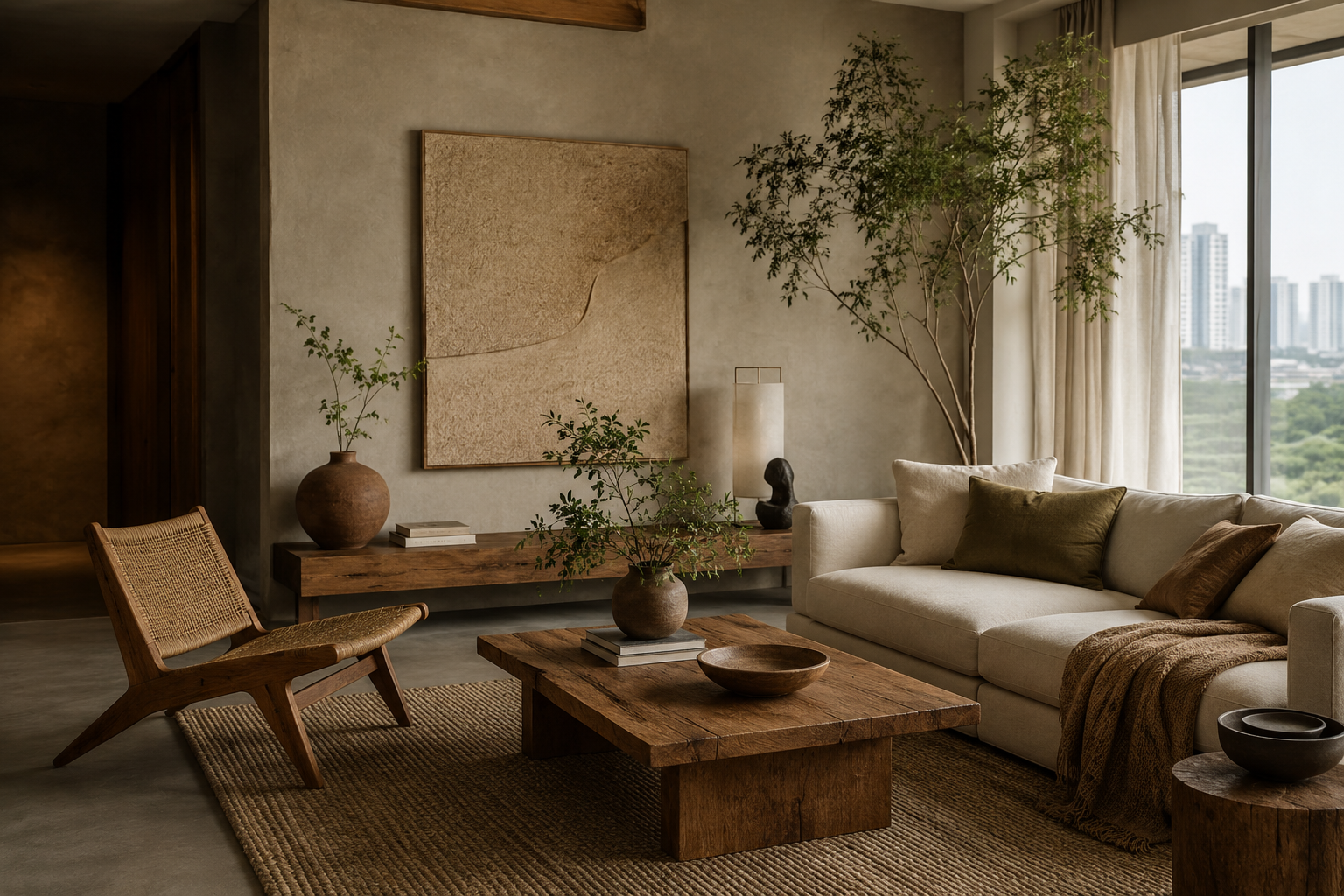
- Wood interior design in Singapore works because timber tones do something no manufactured surface replicates: they carry visible grain variation that the eye reads as natural warmth.
- Engineered timber and veneer resolve the humidity concerns that make solid wood a risk in Singapore’s climate without losing the visual quality.
- Timber tones perform best under warm white lighting at 2700K to 3000K, which is also the colour temperature that produces the most comfortable home atmosphere.
- Natural home design built around timber doesn’t require timber everywhere. One run of joinery, a floor in a living zone, and a floating shelf will carry the visual warmth of wood through the whole room.
- Warm interiors in Singapore resist the dated-material critique because timber’s grain variation improves with age rather than degrading.
Introduction
Every few years, a think piece declares timber out of fashion. Cool grey is in. Polished concrete is in. White lacquer is cleaner. And for a stretch, those calls are accurate. But timber keeps returning to Singapore renovation briefs as a first choice rather than a compromise, and there’s a reason that cycle hasn’t broken yet.
This material holds its ground because no manufactured alternative replicates what timber actually does in a room. The grain variation. The warm response under natural and artificial light. The way a timber veneer shelf looks better at five years than it did at installation, as the wood tone deepens and the surface settles. These qualities aren’t sentimental. They’re measurable differences in how a surface reads in a room, and they matter more in Singapore’s built environment than almost anywhere else.
Singapore’s homes sit inside one of the densest urban environments in the world. The backdrop is glass, concrete, and composite. A home that contrasts with that environment using natural home design anchored in timber produces a genuine perceptual shift. A home that mirrors it with polished and uniform surfaces does not.
What Is Wood Interior Design?
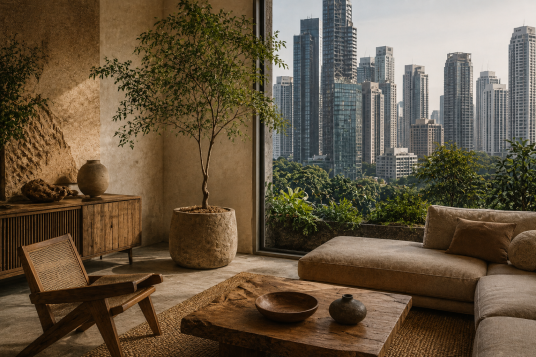
This design approach involves incorporating timber-based materials, including solid wood, engineered timber, timber veneer, and wood-effect surfaces, into residential spaces as primary or accent materials in flooring, joinery, shelving, furniture, and wall treatments. It includes the full range of applications from a single floating shelf in brushed oak to a floor-to-ceiling joinery wall in timber veneer, and from engineered hardwood flooring to a reclaimed timber dining table. In Singapore residential design, timber is most commonly applied through engineered flooring, timber veneer cabinetry and joinery, and features timber shelving or panelling. The defining quality is natural grain variation and warm tone, producing a visual warmth that manufactured surfaces cannot replicate.
Why Timber Still Works in Singapore’s Built Environment
The case for timber in Singapore isn’t nostalgic. It’s perceptual and physiological. A 2025 peer-reviewed scoping review published in Humanities and Social Sciences Communications found that a wood coverage ratio of approximately 30% in an interior space elicited the most positive responses from occupants, who rated those environments as more natural, warm, and comfortable. At higher coverage, the effect plateaued or reversed. The practical implication for Singapore homes is clear: timber doesn’t need to cover the whole room. It needs to be present in the right proportions, in the right positions.
Singapore’s urban context amplifies this effect. The outdoor environment most Singaporeans move through daily is composed almost entirely of glass, polished concrete, aluminium cladding, and paved surfaces. These materials share a quality: they’re uniform, reflective, and cold. A home interior that uses the same material family provides very little contrast from that environment. One that introduces natural timber at the 30% coverage range produces an immediate perceptual shift that the occupant registers as settling, warmth, and rest. This is not an aesthetic preference. It’s a physiological response to material variation.
The Humidity Argument: Why It No Longer Holds
The most persistent objection to wood interior design in Singapore is humidity. Singapore averages 80 to 85% relative humidity year-round. Solid timber expands and contracts with humidity changes, which leads to warping, gapping, and surface movement in floors and joinery. This was a genuine practical concern when solid hardwood was the primary timber option available.
Engineered timber resolves it. An engineered timber board uses a thin top layer of real hardwood bonded to a plywood or HDF core. The core material is dimensionally stable under humidity variation. The top layer carries all the grain, colour, and warmth of solid timber. The board doesn’t move in Singapore’s climate in the way solid timber does. Engineered oak, teak, walnut, and ash in Singapore flooring applications have been performing reliably for over a decade, and they’ve made the humidity objection to timber flooring largely obsolete for homeowners who specify correctly.
Timber veneer in joinery faces the same resolution. A cabinet door in timber veneer over an MDF core doesn’t move with humidity. The face reads as timber. The structure stays stable. In Singapore’s kitchen and bedroom joinery, timber veneer specified with a matte or natural oil finish performs durably without the cracking, swelling, or finish degradation that solid timber joinery risks in poorly ventilated spaces.
The cases where timber genuinely doesn’t perform well in Singapore are specific: solid timber shelving in a poorly ventilated bathroom. Untreated solid timber furniture near an air-conditioning unit where temperature swings are extreme. Solid wood flooring in a ground-floor unit with direct concrete substrate moisture. In these cases, the right response is specification rather than avoidance: use engineered timber, apply the correct finish, and locate the timber surface away from direct moisture exposure.
How Timber Tones Work With Light in Singapore Homes
Timber and warm artificial lighting have a specific relationship that makes this warm timber approach particularly effective in Singapore. Under cool white light at 4000K or above, timber veneer reads as a cool, flat surface. The grain is visible, but the warmth is suppressed. The material looks like a material rather than feeling like one.
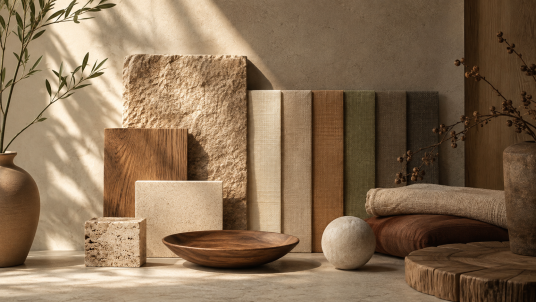
Under warm white light at 2700K to 3000K, the same timber surface transforms. The grain deepens. The warm undertones in oak or ash read as gold rather than beige. The natural variation in the wood face becomes the room’s primary visual texture rather than a background detail. This is one of the most consistent findings in Singapore renovation feedback: homeowners who specify timber joinery under cool fluorescent or LED panels are often disappointed. The same joinery under warm, dimmable downlights or pendant lighting looks completely different.
This relationship is one reason these two elements are discussed together. They activate each other. A room with engineered oak flooring and warm white lighting at 2700K reads as settled and natural. The same floor under a flat cool panel reads as a neutral surface awaiting decoration. The light is doing most of the work, and the timber provides the surface that benefits most from the warm light’s qualities.
“Timber doesn’t photograph in warm light the way it looks in person. In person, grain variation under warm light produces a room that reads as genuinely warm. A photograph tends to flatten what the eye and body register directly.”
Where to Position Timber in a Singapore Home
The 30% coverage guideline from the research cited earlier has a practical implication for Singapore’s interior design: timber works best when concentrated rather than uniform. Three specific positions consistently deliver the highest return for the floor area they occupy.
Flooring in the living and dining zones is the highest-impact timber application in a Singapore condo or HDB. A continuous run of engineered oak from the entryway through the open-plan living and dining area grounds the entire floor plan in warmth. The floor is the room’s largest surface. Getting it right in timber is worth more than any wall or joinery decision. Matte or natural oil finishes preserve the grain’s visibility better than high-gloss alternatives, which flatten the surface.
Joinery in the primary sightline is the second position. In a Singapore living room, the television wall or the built-in unit opposite the main seating position is always in view. A timber veneer run on that joinery face, even if it’s only one section within a mixed-finish unit of lacquer and veneer, creates a warm anchor in the room’s primary visual field.
A floating shelf or feature element at eye height in a key room is the third. In a bedroom, a timber floating shelf flanking the headboard wall brings this warmth into the most personal room in the house without requiring flooring or full joinery changes. The shelf costs less than either of the other two options and carries the same visual quality.
“Three well-placed timber elements do more for a Singapore room’s warmth than covering every surface in wood. Grain needs space around it to read as warm rather than busy.”
Is Wood Interior Design Right for Your Singapore Home?
For Singapore homeowners renovating in 2026, yes. The practical concerns about humidity are solved by engineered timber and veneer specifications. The lighting relationship means that the warm interiors timber creates are amplified rather than suppressed by the warm white lighting that most Singapore homeowners are now choosing. And the 30% coverage threshold means the investment is targeted rather than total. A Singapore home with engineered oak flooring in the living zone, timber veneer on the primary joinery face, and a floating shelf in the bedroom has achieved the warmth that timber produces without covering every surface. The LOME Interior home interior design service covers how timber decisions fit into a full renovation brief.
Frequently Asked Questions
1. Is timber flooring suitable for Singapore homes, given the humidity?
Engineered flooring is well-suited to Singapore’s humidity. The plywood or HDF core of an engineered board is dimensionally stable and doesn’t expand and contract the way solid timber does. The top layer carries the grain and warmth of real wood. Engineered oak, teak, and walnut have been used successfully in Singapore HDB flats and condos for over a decade. Solid timber flooring on a concrete substrate remains a risk in high-humidity spaces.
2. What timber species work best for warm interiors in Singapore?
Lighter, open-grained species carry warmth without heaviness in compact Singapore spaces. Oak in a natural or warm honey tone suits most floor plans. Ash and birch read similarly. Walnut and American cherry produce richer, darker warmth that suits larger rooms or spaces with strong natural light. Wire-brushed and matte-oiled finishes preserve the grain’s visibility better than high-gloss lacquer, which flattens the surface.
3. How much timber is needed to create a natural home design in a Singapore condo?
Research suggests a wood coverage ratio of around 30% produces the most positive warmth and comfort response in interior spaces. In a Singapore condo, this translates to engineered timber flooring in the living zone combined with timber veneer on the primary joinery face. Full timber coverage across all surfaces isn’t needed and can tip the effect toward heaviness. The LOME Interior flooring guide for Singapore homes covers the practical options in detail.
4. Does timber interior design look dated compared to other materials?
Timber’s grain variation and warm tone don’t date in the way colour trends or surface patterns do. A matte oak floor specified in 2015 reads as natural and current today. A high-gloss dark laminate from the same year reads as a product of its time. The materials that look dated are manufactured finishes chosen to mimic timber: laminate with a photographic wood-grain print tends to read poorly as it ages. Real timber and quality veneer improve with age as the tone deepens and the surface acquires a patina.
5. Does timber work in a minimalist Singapore interior?
Yes. Timber is one of the few materials that introduces warmth without adding visual noise. In a minimalist space with white walls, a polished concrete-effect floor, and minimal furniture, a single timber veneer joinery face reads as a deliberate warm counterpoint rather than as a decorative addition. The grain is quiet enough not to compete with the minimalist structure. For more on how timber and texture work in textural design, the LOME Interior guide to multi-textural design covers the broader principles.
Timber’s continued presence in Singapore renovation briefs isn’t a sentiment or fashion cycle. It’s the material doing something that alternatives still can’t replicate: introducing warmth and natural variation into spaces surrounded by manufactured surfaces, at a coverage level where the body and eye register it as genuinely different from the environment outside. This approach doesn’t need to cover every surface. It needs to be present at the right positions, specified correctly for the climate, and lit to bring its warmth to life. Those three conditions, met correctly, produce genuinely warm spaces that age better than any trend-driven finish and feel more comfortable than any surface chosen for neutrality alone. If you’re planning a Singapore renovation and want to work through how timber fits your specific floor plan and joinery brief, speak with the LOME Interior team before the material selections are finalised.
