
Key Takeaways
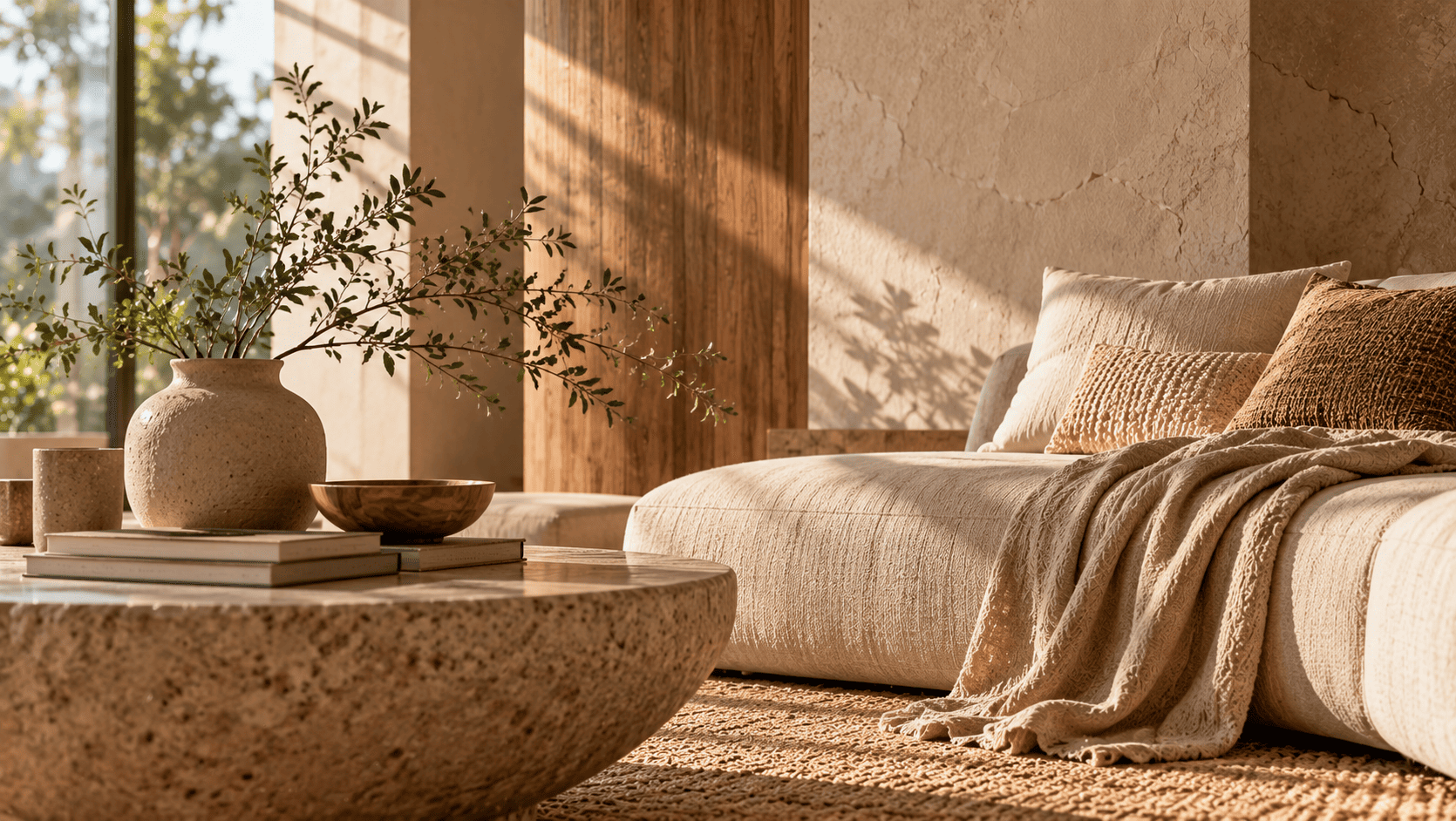
- Wabi sabi interior design produces its characteristic calm not through emptiness but through the specific quality of its surfaces: organic, variable, and imperfect in ways that the brain processes as natural rather than manufactured.
- Textured interiors in the wabi-sabi register activate the same physiological response as natural environments, which is why a limewash wall or an unfinished timber surface feels different from a smooth painted wall even when the colour is identical.
- Calming home design in Singapore benefits specifically from wabi-sabi principles because Singapore’s built environment is dense, uniform, and high-stimulus, the exact opposite of the sensory condition that natural textures counteract.
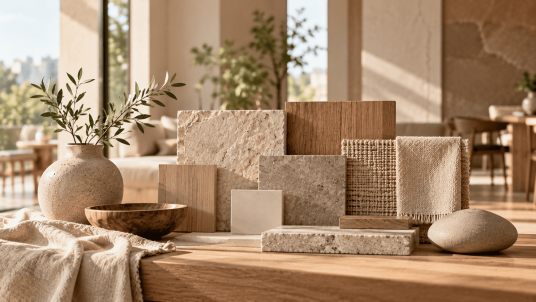
- Natural materials carry visible variation that no manufactured alternative replicates: the grain of timber, the mineral pattern of stone, the weave of linen, the surface depth of clay plaster.
- The renovation decisions that produce wabi-sabi calm are material and finish choices made before construction ends, not decorative additions placed on top of a finished room.
Introduction
Wabi-sabi is the Japanese aesthetic that finds beauty in imperfection, incompleteness, and the natural passage of time. A cracked ceramic bowl. A timber floor that darkens unevenly with age. A limewash wall whose colour shifts across a single surface as the light changes. These are not aesthetic accidents. They result from choosing materials that carry the evidence of where they came from and how they have been used.
In Singapore’s compact, urbanised homes, this aesthetic responds to something specific. The city’s built environment is dense, geometrically precise, and visually uniform. Glass towers. Identical tile floors. Smooth painted walls. The home interior that uses the same materials as the outside environment produces no sensory contrast and no change of register when the front door closes. This aesthetic produces exactly that contrast: surfaces that behave differently from manufactured ones, that carry variation and depth, and that give the eye and the hand something genuinely different from the city outside.
But describing wabi-sabi as a style is less useful than understanding why it produces calm. The answer is in the texture.
Why Texture Creates Calm: The Mechanism
The calming quality of wabi-sabi surfaces is not a matter of taste or cultural association. It’s rooted in how the brain processes surface variation. Research on biophilic interior design published in PMC found that natural surface textures and material analogues (representations of the textures, geometries, and patterns found in natural environments) produce a distinct physiological response. Natural textures allow the visual and tactile system to process variation at its own pace, without the sharp edges and uniform surfaces that require the eye to register hard boundaries.
A smooth painted wall presents a single datum. The eye processes its colour once, registers the edge where it meets the ceiling, and moves on. There is nothing further to engage with. A limewash wall in the same colour presents continuous variation across its surface: lighter where the brush strokes crossed, deeper where the plaster base shows through, different at every hour of the day as the natural light changes angle. The eye doesn’t stop at one datum. It rests, wanders, and settles in a way that a uniform surface doesn’t allow.
This is the specific mechanism behind wabi-sabi calm. It’s not the imperfection itself that produces the response. It’s the fact that organic variation gives the visual field something to process slowly, the same way a natural landscape does. In Singapore’s compact homes, where the visual field is always close to every wall surface, this quality matters more per square metre than in larger spaces.
What Is Wabi-Sabi Interior Design?
This approach selects materials, finishes, and objects for their visible evidence of natural origin, age, or process rather than for their precision or perfection. It draws on a Japanese philosophy of finding beauty in transience and imperfection, applied in interior design through the choice of surfaces that carry grain, mineral variation, weave, or surface depth rather than manufactured uniformity.
In Singapore, the practical expression of this aesthetic involves limewash and clay plaster wall finishes, wire-brushed or matte-oiled timber flooring and joinery, stone with visible mineral variation, linen and cotton textiles in natural undyed tones, rattan and bamboo furniture, and unglazed or hand-formed ceramics. None of these materials is precious or expensive in itself. What they share is the quality of looking and feeling like something that came from somewhere rather than something made to specification.
The Four Textured Surfaces That Produce Wabi-Sabi Calm in Singapore Homes
Limewash and Clay Plaster Walls
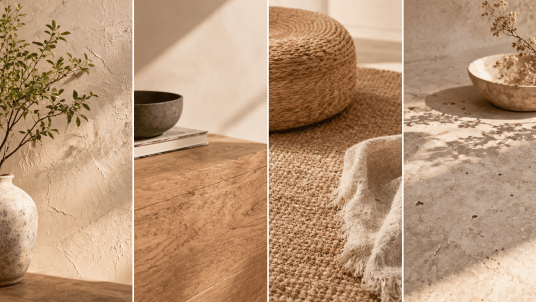
Limewash is the most accessible route to textured interiors in a Singapore home. Applied over existing smooth walls in multiple thin layers with a wide brush, it produces a surface where the colour shifts across the plane: lighter at the brush strokes, deeper where layers accumulated, different again in morning and evening light. The wall reads as alive in a way a flat emulsion surface does not.
Clay plaster goes further. Applied as a mineral-based coating, it carries the visible texture of the material itself: slight ridges, surface variation, and a matte quality that absorbs rather than reflects light. In a Singapore living room or bedroom, a clay plaster feature wall introduces the sensory quality of an organic material at the room’s primary visual surface. It also performs practically in Singapore’s climate: clay plaster is breathable and slightly moisture-regulating, which suits humid interior conditions.
Both finishes carry visible process, which is what produces the calming quality. The wall shows how it was made.
Wire-Brushed and Matte-Oiled Timber
Timber in this register is unfinished in the decorative sense but carefully specified in the practical one. Wire-brushed oak or ash raises the grain of the wood surface, creating a texture that is felt as much as seen. Matte-oiled finishes preserve the grain’s visibility and deepen the warmth of the wood tone without adding the glossy film that makes a timber surface read as manufactured.
In a Singapore home, wire-brushed engineered timber flooring carries the grain character of natural wood while handling humidity better than solid timber. A matte-oiled timber veneer on joinery doors brings the same visual quality to vertical surfaces. Under warm white lighting at 2700K, the grain activates visually. The surface reads as deeply warm and alive, rather than as a neutral backing.
This is natural materials at their most direct: the surface shows the tree.
Stone With Visible Mineral Variation
Stone in the wabi-sabi register is not polished marble. It’s travertine with its characteristic pitting and fossil structure, sandstone with its layered mineral bands, or sintered stone in a travertine or limestone effect that carries the same visual variation as the natural material. The pores, the veining, the colour variation across a single slab: these are the qualities that make stone read as natural rather than manufactured.
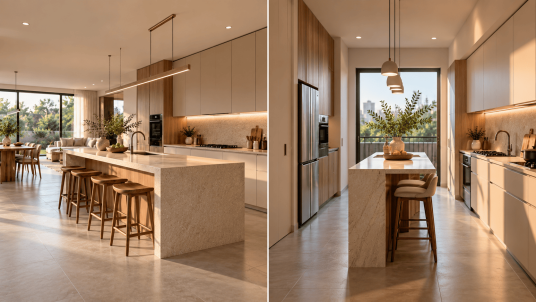
In Singapore kitchens and bathrooms, a stone countertop or floor in a travertine effect introduces textured interiors at the room’s most-touched surface. The pitting of travertine, which some homeowners initially treat as a flaw, is precisely the quality that makes it calming rather than sterile. The eye finds the surface interesting at close range for the same reason it finds a natural landscape interesting: there is always more variation to register.
Linen, Cotton, and Natural Woven Fibres
The softness in this register often arrives through textiles rather than construction. Linen in a natural undyed or warm grey tone introduces tactile variation: the weave is visible, the hand is different from synthetic alternatives, and the surface wrinkles and drapes in ways that communicate natural origin. A linen cushion on a sofa, a cotton throw folded over a chair arm, or a jute rug under a dining table: each brings the sensory quality of natural fibre into the room without renovation.
These do not require a permanent decision. They can be introduced after the renovation is complete, useful for homeowners building this aesthetic without a full refurbishment brief.
“Wabi-sabi calm in a Singapore home isn’t about leaving things unfinished in a visible way. It’s about choosing materials that show how they were made rather than hiding every trace of their origin.”
The Wabi-Sabi Palette for Singapore Homes
The colour palette sits in a warm, muted, and slightly mineral range: off-white with a clay undertone, warm grey, ash, sage green that leans toward olive, muted terracotta, warm sand, and the natural tones of timber and stone. These are colours that read as drawn from the natural world rather than mixed from synthetic pigments.
In Singapore’s varied lighting conditions (bright in east and west-facing units, shadowed in north-facing ones), the wabi-sabi palette behaves well because its tones are warm enough to hold their quality under limited natural light, and neutral enough not to overwhelm compact rooms. A clay-toned limewash wall reads as grounded in morning light and as amber-warm in evening light. It is never the same colour twice, which is exactly the quality that makes it effective in calming home design.
Is Wabi-Sabi Interior Design Right for Your Singapore Home?
For any Singapore homeowner who finds uniformly smooth, precisely finished interiors to be stimulating rather than restful, yes. Wabi sabi interior design provides calming home design through texture and natural material variation rather than through emptiness alone. The specific surfaces that carry this quality (limewash walls, wire-brushed timber, travertine-effect stone, linen textiles) are all available in Singapore and all suited to Singapore’s climate when specified correctly. For more on how these materials work in Singapore’s built environment, the LOME Interior guide to multi-textural design covers how different textures interact in a Singapore interior. The LOME Interior wabi-sabi styling guide covers the specific objects and accessories that complete the aesthetic. If you’re planning a renovation and want the wabi-sabi quality built into the wall finishes, flooring, and joinery from the start, speak with the LOME Interior team.
Frequently Asked Questions
1. What is wabi-sabi in interior design?
Wabi-sabi in interior design is a Japanese-influenced approach that selects materials and finishes for their visible natural variation, imperfection, and evidence of origin rather than for their precision. In practice, it means choosing limewash walls over smooth painted surfaces, wire-brushed timber over high-gloss veneer, travertine-effect stone over uniform ceramic tiles, and linen textiles over synthetic alternatives. The approach produces a calming sensory quality because organic surface variation gives the eye something to process slowly rather than something to register and move on from.
2. Which surfaces and finishes work best in Singapore’s climate?
Limewash paint and clay plaster work well in Singapore because both are breathable and slightly moisture-tolerant, which suits humid interior conditions. Wire-brushed engineered timber handles Singapore’s humidity better than solid timber while carrying the same visual grain quality. Sintered stone in a travertine or limestone effect provides natural material variation with better moisture resistance than natural stone. Linen and cotton textiles are breathable and appropriate for Singapore’s temperature, though natural undyed fibres should be kept away from direct sun exposure in west-facing rooms.
3. How does wabi-sabi differ from minimalism?
Minimalism reduces the number of elements in a room. Wabi-sabi specifically values the quality of the remaining elements, prioritising those that carry natural variation and evidence of process. A minimalist room can have smooth white walls, precise joinery, and a clean, uncluttered floor, and still be recognisably minimalist. A wabi-sabi room needs textured walls, surfaces that show their material origin, and objects that carry age or imperfection. The two aesthetics overlap in their preference for restraint, but wabi-sabi is defined by material character rather than by object reduction.
4. Can wabi-sabi design work in a small Singapore HDB flat?
Yes. The surfaces that define wabi-sabi do not require a large floor area. A limewash feature wall in a compact living room, a wire-brushed engineered timber floor, and a linen sofa cover are all achievable in a Singapore HDB bedroom of 10 square metres or a living room of 18 square metres. The calming quality of natural surface variation is actually more effective in compact spaces because every surface is always close enough to see and feel clearly. Surfaces are experienced at closer range in small rooms, which means their tactile and visual quality registers more completely.
5. What natural materials are most practical for wabi-sabi design in Singapore?
Engineered timber with a wire-brushed or matte-oiled finish for flooring and joinery: handles humidity better than solid wood. Limewash paint or clay plaster for feature walls: breathable and suited to Singapore’s humid climate. Sintered stone in a travertine or limestone effect for countertops and bathroom floors: moisture-resistant with natural material variation. Linen and cotton textiles for soft furnishings: natural, breathable, and tactilely distinct from synthetic alternatives. Rattan and bamboo for furniture and pendant lighting: natural origin, visible weave, and appropriate for Singapore’s tropical conditions.
The calm this design approach produces in a Singapore home is not the calm of emptiness. It’s the calm of surfaces that gives the eye somewhere to rest. Limewash walls whose colour shifts across the day. Timber floors whose grain deepens with age. Stone countertops whose pitting and mineral variation make every square centimetre slightly different from the last. These surfaces produce a physiological response that smooth, uniform finishes don’t because the brain processes natural variation the way it processes a natural environment: slowly, restfully, and without the effort that manufactured precision requires. In a city as uniformly built as Singapore, that contrast is not incidental. It’s the point.
