
Key Takeaways
- Arches replace rigid doorways, expanding the sense of space in compact Singapore residences. They allow light and airflow to flow smoothly between areas. Many local residents choose them to reduce confinement while maintaining privacy.
- Rounded furniture minimises injury risks for children and pets by eliminating hard corners. Such pieces adapt well to constrained layouts. Select options in regional woods for a nod to Singapore’s aesthetic heritage.
- Curved carpentry elevates standard cabinets and shelving into functional focal points for kitchens or studies. It conceals imperfections and improves usability. Professionals customise them to HDB specifications.
- Gentle spatial transitions using curved partitions merge living areas without barriers. This suits open-plan condominiums amid urban noise. They define serene zones effectively.
- Collaborate with firms or refined curved elements that avoid whimsy. They integrate trends thoughtfully into existing designs. The approach yields enduring results.
Introduction
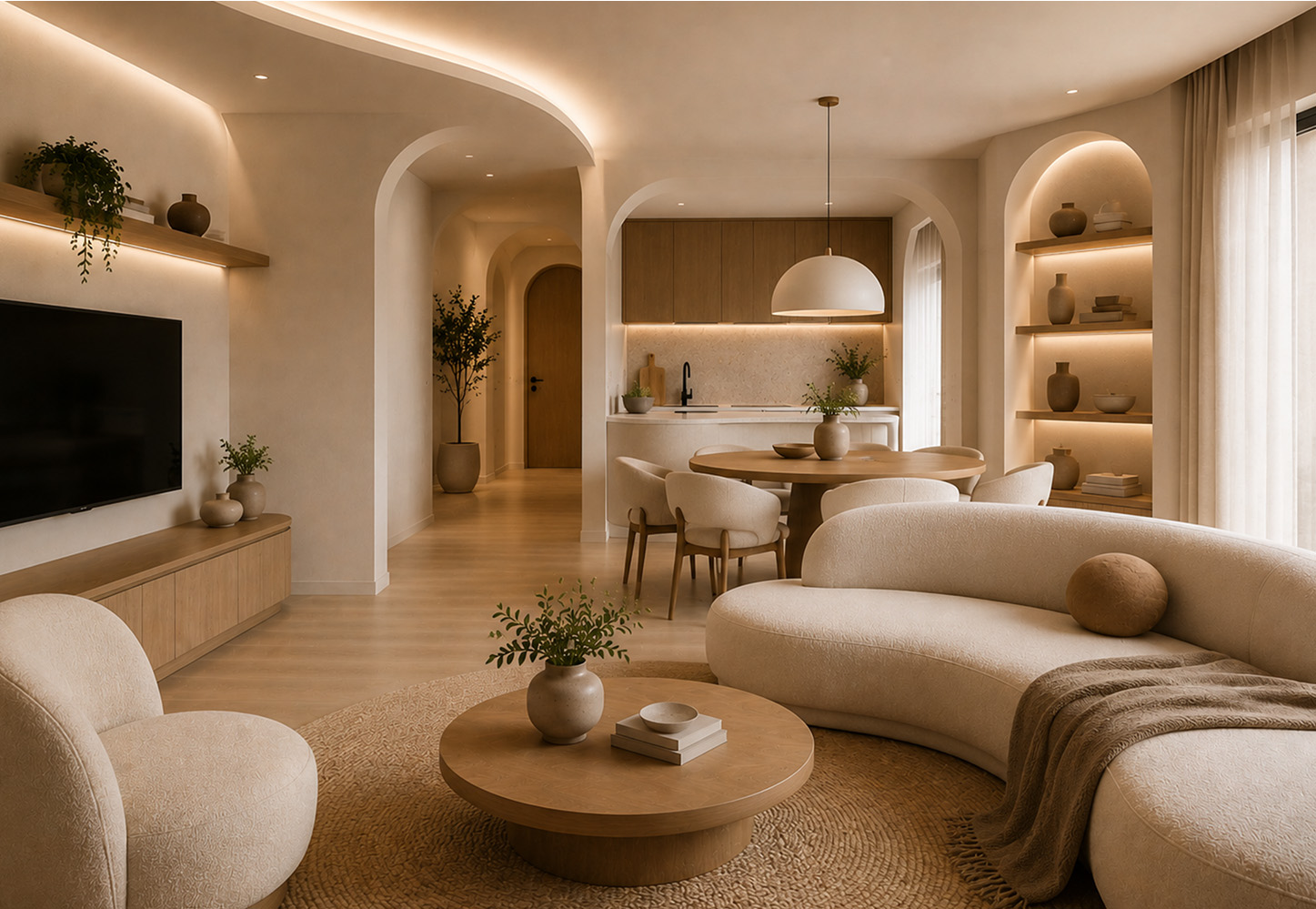
Curved interiors bring a gentle touch to Singapore homes, swapping sharp edges for smooth arches, rounded furniture, and flowing spaces. This 2026 trend makes rooms feel open and cosy, perfect for the humid climate and busy lives.
Home interior design in Singapore rides a wave of softer looks. Singapore mirrors this; HDB reno approvals spiked, with curves in the mix. Folks here want calm after the daily grind. The trend toward soft architecture has fueled a reported 297% sales growth for KEDING’s ECO⁺ Laminates, specifically used for curved surfaces in 2025.
Numbers don’t lie, but why do they hit home so hard in the city? This blog explores how curved interiors are redefining Singapore homes, from arches and rounded furniture to soft modern layouts, creating fluid, welcoming spaces that balance elegance with everyday comfort.
Why Curves Suit Singapore Homes So Well?
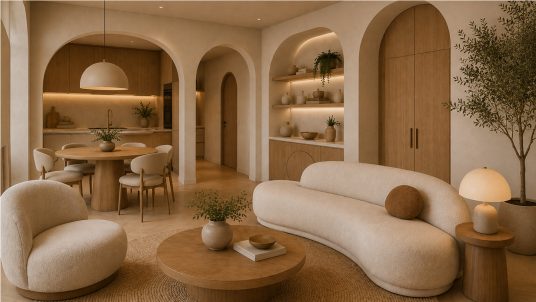
Rectilinear designs served their purpose in past minimalist eras. Yet Singapore’s housing, HDB units below 700 square feet, condominiums with irregular angles, benefits from curves. Harsh lines amplify enclosure, worsened by humidity, limiting ventilation. Curves expand the perceived space visually. An arch to the balcony invites views without obstruction.
Rounded furniture fits precisely, preserving circulation for strollers or cleaning. Within soft modern interiors, it counters the austerity of high-rises. It echoes the fluidity of Peranakan shophouses alongside contemporary lines. Home interior design in Singapore often highlight a desire for less stark environments after commutes.
Simple Steps to Add Curves Yourself
Begin modestly with home interior design in Singapore. Source oval dining tables from Courts for around SGD 150, accommodating six comfortably. Arched mirrors from Lazada expand hallways affordably.
For shelving, source plywood locally and shape via steaming; tutorials abound online. In bedrooms, install upholstered rounded headboards using store fabrics.
Kitchens benefit from rounded laminate counter edges; template irregular HDB walls first. Apply matte white paint for cohesive seams.
Straight Talk on Common Hiccups
A frequent misconception: Curves appear juvenile. This is incorrect. As some interior design firms deliver refined versions, such as matte-black arches in urban lofts; one should know of who to choose.
Maintenance proves simpler; surfaces collect less dust than angles. Costs rise 15% for materials but offset decorative needs. HDB permits non-structural changes readily.
Resilience holds in humidity; teak maintains form over the years. Rounded profiles reduce pet damage. With reservations addressed, longevity merits note.
The Rise of Rounded Furniture
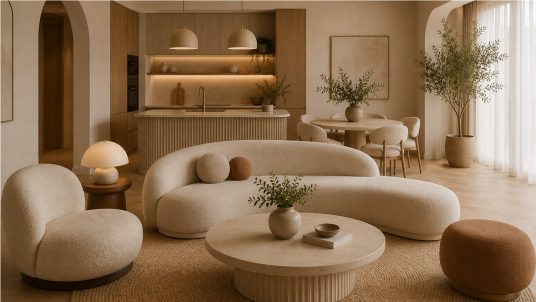
Furniture brands are also pushing softer shapes heavily in 2026. Straight sofas and boxy coffee tables are slowly being replaced by gentler forms.
Rounded furniture creates comfort visually. People naturally feel more relaxed around softer lines. It also reduces the hard visual breaks inside a room.
Popular choices include:
| Furniture Piece | Why Homeowners Like It? |
| Curved sofas | Makes living rooms feel cosy |
| Oval dining tables | Easier movement in compact dining areas |
| Rounded bed frames | Softer bedroom appearance |
| Circular coffee tables | Safer for families with kids |
| Curved kitchen stools | Better flow around islands |
Rounded shapes also pair well with wood textures, warm lighting, and neutral tones. This is why many designers connect the trend with soft modern interiors.
Still, there’s a limit. Too many rounded items can make the space feel awkward. A curved sofa, curved wall, curved shelf, and circular carpet all in one room can quickly look messy. A cleaner approach usually works better.
Curved Carpentry Without Looking Too Fancy
Many homeowners like curves but worry the design may feel too decorative after a few years; that concern is valid.
Some homes overload arches, ending up looking themed rather than timeless. The better approach is subtle detailing.
Some interior design firms often apply curves in ways that still feel modern and clean. Instead of turning every corner into an arch, they use softer transitions only where they matter most.
This may include:
- Rounded shelf edges
- Curved kitchen end panels
- Soft wall niches
- Gentle ceiling curves
- Arched mirrors
These details soften the room quietly without demanding attention all the time.
That balance matters a lot in home interior design in Singapore because homes here are used heavily every single day. Trends that feel too loud usually age quickly.
Sticking Power of This Trend
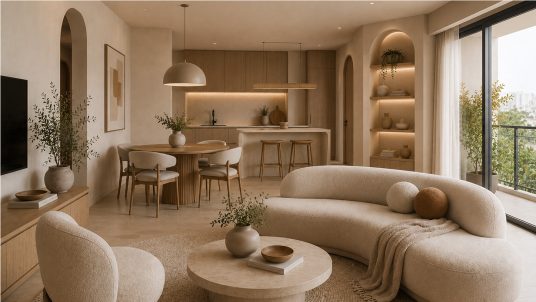
Curves draw from 1970s organic influences, updated for today. In Singapore, they complement biophilic elements with arches supporting verdure. Forecasts hold steady through 2029, as they outperform perpetual minimalism for evolving households.
Conclusion
Curved interiors are changing how homes in Singapore feel in 2026. The goal is no longer perfect straight lines everywhere. Homeowners want warmth, comfort, and spaces that feel easier to live in day to day.
Arches, rounded carpentry, and softer furniture shapes help homes feel more welcoming without looking overdone. The key is restraint. A few thoughtful curves often work better than filling every corner with them.
Bring softer, easing lines and a calmer way of living into your home with LOME Interior, known for mindful layouts and polished renovation ideas, and curved carpentry, smart space planning, and clean 3D perspective drawings.
We have two showrooms in Joo Chiat and Toa Payoh, where you can explore workable concepts for condos, HDB flats, and family homes, while discussing layouts, materials, lighting, and storage solutions that truly make sense.
LOME Interior guides you through the full renovation, supporting every phase so your space stays visually timeless instead of trend‑bound.
Visit the showrooms daily, 11 AM–8 PM, book a free quotation, or call 6747 0893 or 6253 8272, or connect via their website to begin planning a home designed around comfort, flow, and everyday living.
FAQs
- How can I kick off curved interior design in a Singapore condo?
Begin with small touches like rounded furniture or a single archway. Sketch your layout on paper to visualise flow and balance. For guidance, LOME Interior offers free consultations to help you start confidently.
- Can curved interior design work in tiny HDBs?
Absolutely. Choose scaled‑down elements such as partial arches or slim rounded corners. These optimise floor space while maintaining the soft, modern aesthetic.
- Is rounded furniture cost‑effective?
Yes. Sofas start at around SGD 300, making them an accessible upgrade. Rounded pieces also enhance safety and comfort, especially for families with children or pets.
- Can I combine straight and curved lines?
Certainly. Use curves in relaxed zones, like living or lounge areas, and straight lines in functional spaces, such as kitchens or work areas. This balance creates visual harmony and spatial rhythm.
- Are there any renovation incentives available?
Yes. Under HDB’s Home Improvement Programme (HIP), homeowners may receive up to SGD 30,000 in support. Curved design features can qualify; check the official HDB portal for details and eligibility.
